The Montenvers Railway
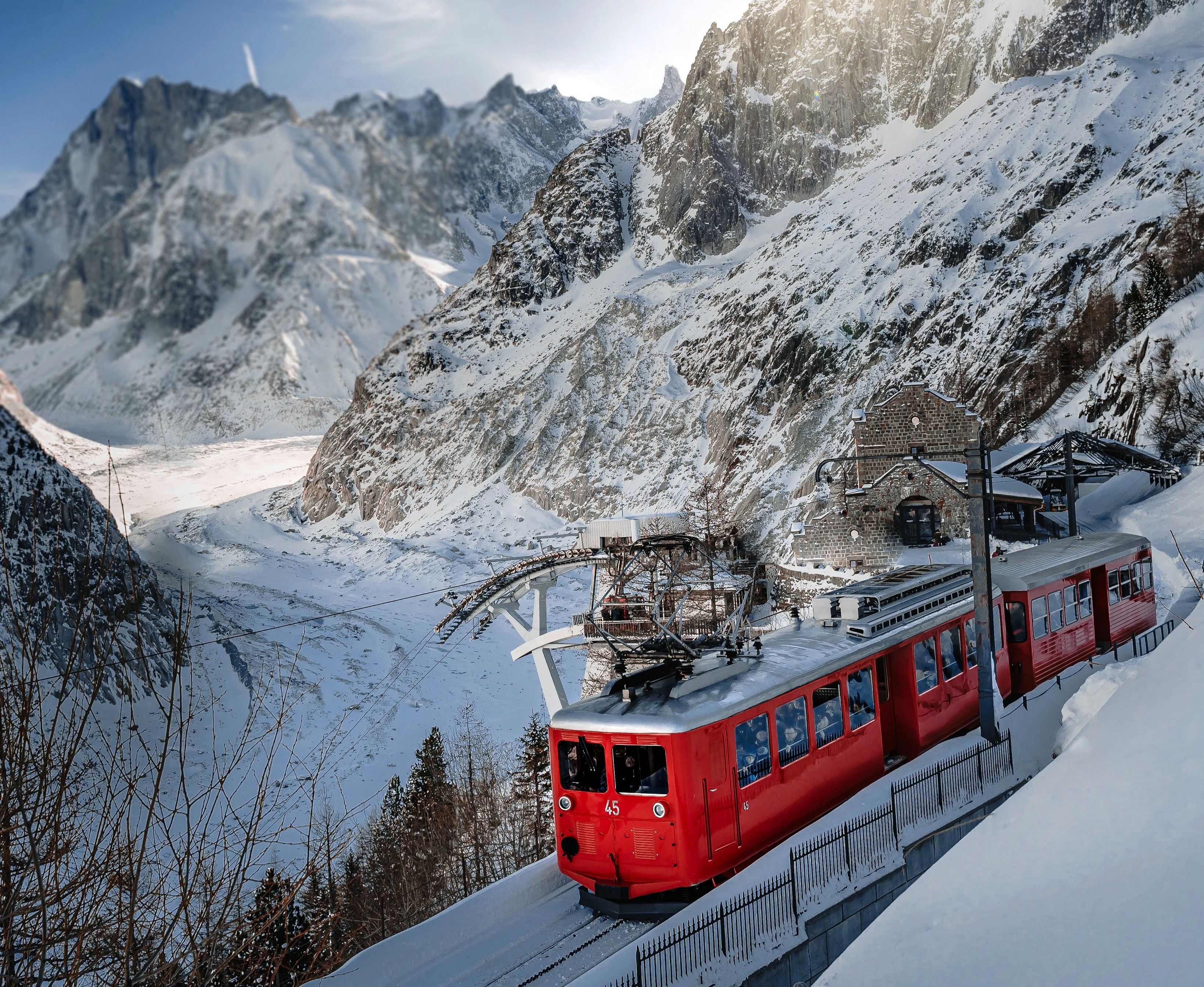
Departing from Chamonix centre, the rack-and-pinion railway takes around 20 minutes to deliver you to Montenvers at an altitude of 1,913 metres. The railway was opened in stages from 1908 and the complete line to Montenvers opened in 1909. The viaduct and parts of the line can be seen from the valley floor. In the height of the season you should book tickets as it gets busy and crowds push and shove to get onto the train. Once aboard it’s a pleasant trip, the train climbing steeply up through trees and tunnels and at one point pausing for the returning train to pass. It is possible to walk the route from Les Bois or follow the train tracks from Chamonix centre but it is less enjoyable.
The Glacier & Panorama
An imposing panorama of the Mer de Glace (Sea of Ice), Les Drus and the Grandes Jorasses greets you as you alight the train. The Mer de Glace drains the north side of Mont Blanc and, at around 7 kilometres long, it is the largest glacier in France. The ‘Sea of Ice’ name reflects the glacier's size and appearance, including the coloured bands formed within the ice.
A short walk away from the train station you will find the Refuge du Montenvers, now a hotel, and some smaller buildings including the Temple of Nature and a small museum. You can find a peaceful spot and admire the views towards the Dru and the Verte or across to the Aiguilles Rouges. In the opposite direction is the newer café and viewpoint, Le Panoramique Mer de Glace, a fine spot to enjoy some refreshments. Looking up the glacier you can see the famous Grandes Jorasses at the end of the valley.
Some popular hikes start here, including the Grand Balcon Nord to Plan de l’Aiguille. Well-equipped hikers and climbers venture out onto the glacier. In winter, skiers can use the Montenvers train to get back to Chamonix after exiting the Vallée Blanche.
The Ice Cave & Climate Impact
From the train station, the Télécabine de la Mer de Glace now takes visitors closer to the glacier and the Ice Cave, followed by around 200 steps down to the entrance. The cave is cut directly into the glacier and remodelled each year as the ice moves. More people have been underneath this glacier than almost any other, and the journey requires a certain amount of endurance. At the bottom, blue carpets guide you into the Ice Cave and its tunnels.
The ice is fascinating but the outside is less so, often looking more like a building site than a pristine glacier. Mer de Glace is both a spectacular and depressing place. During the Ice Age it extended much further down the valley; today its retreat is clearly visible from Montenvers. The changing route to the Ice Cave, with the glacier continuing to pull away from the station, provides an unusually direct illustration of the impact of a warming climate on the Alps.